
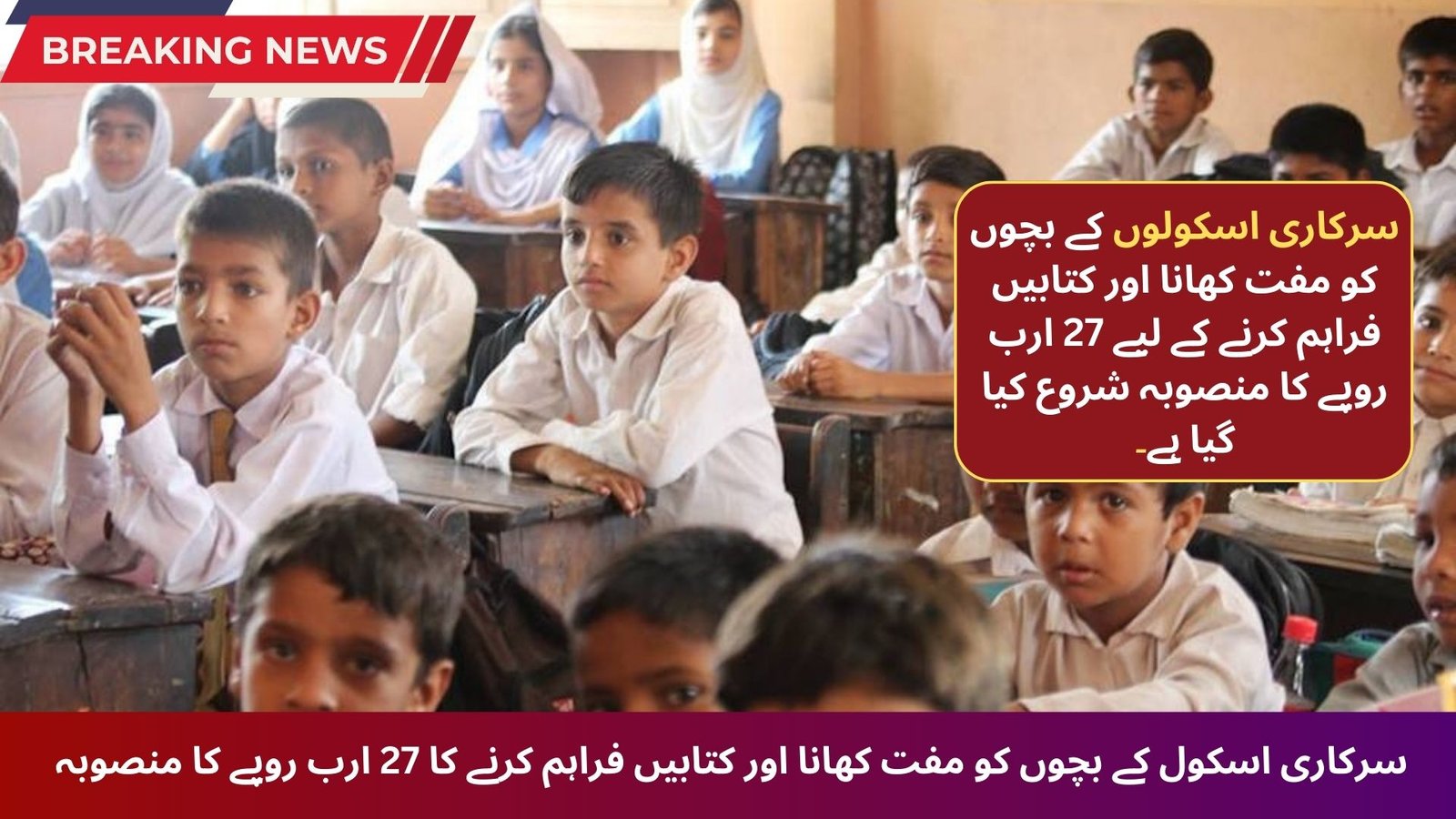
The government of Pakistan has launched an incredible initiative to provide free food and books to children in government schools—allocating Rs. 27 billion to this cause. This move aims to tackle malnutrition, boost literacy, and encourage school attendance, paving the way for a brighter future for our children.
Why This Initiative Matters
The goal is twofold—combat malnutrition and ensure children have the essential educational resources they need. Malnutrition and lack of access to books are significant challenges in Pakistan, affecting children’s health and learning. By offering free meals and books, the government hopes to improve students’ health, academic performance, and school attendance.
How It Will Work
The Rs. 27 billion budget will be used over a set period to ensure the program’s success and sustainability. The initiative will roll out in phases, starting with the most underdeveloped regions. The government will partner with NGOs, international donors, and local communities to make this happen smoothly.
Key Components
- Nutritious Meals: Carefully planned to meet children’s dietary needs—proteins, carbs, vitamins, and minerals. The meals will be culturally appropriate and appealing.
- Free Books: Every student will receive a set of textbooks and essential materials, covering all core subjects and aligned with the national curriculum.
- Hygiene and Safety: Strict hygiene standards for meal preparation and regular quality checks. Books will be high-quality and error-free.
- Monitoring and Evaluation: A robust system to track the program’s progress—collecting data on attendance, academic performance, and health.
- Community Involvement: Engaging parents, teachers, and local leaders to ensure community ownership and support.
Expected Benefits
- Improved Health: Regular nutritious meals will reduce malnutrition and improve overall health.
- Better Academic Performance: Well-nourished children with access to textbooks will perform better in school.
- Higher Enrollment and Attendance: Free meals and books will attract more children to school, reducing dropout rates.
- Economic Growth: Educated and healthy children will contribute to Pakistan’s economic development in the long run.
Challenges
- Logistics: Ensuring timely delivery of meals and books to remote areas can be challenging—effective planning is crucial.
- Sustainability: Long-term funding and resources are essential for the program’s continuation.
- Quality Control: Ongoing monitoring to maintain the nutritional value of meals and the accuracy of educational materials.
Conclusion
Providing free food and books to government school children is a game-changer—addressing malnutrition and enhancing education in Pakistan. With a thoughtful plan and substantial budget, this initiative has the potential to significantly improve the lives of countless children, laying the foundation for a prosperous future.