
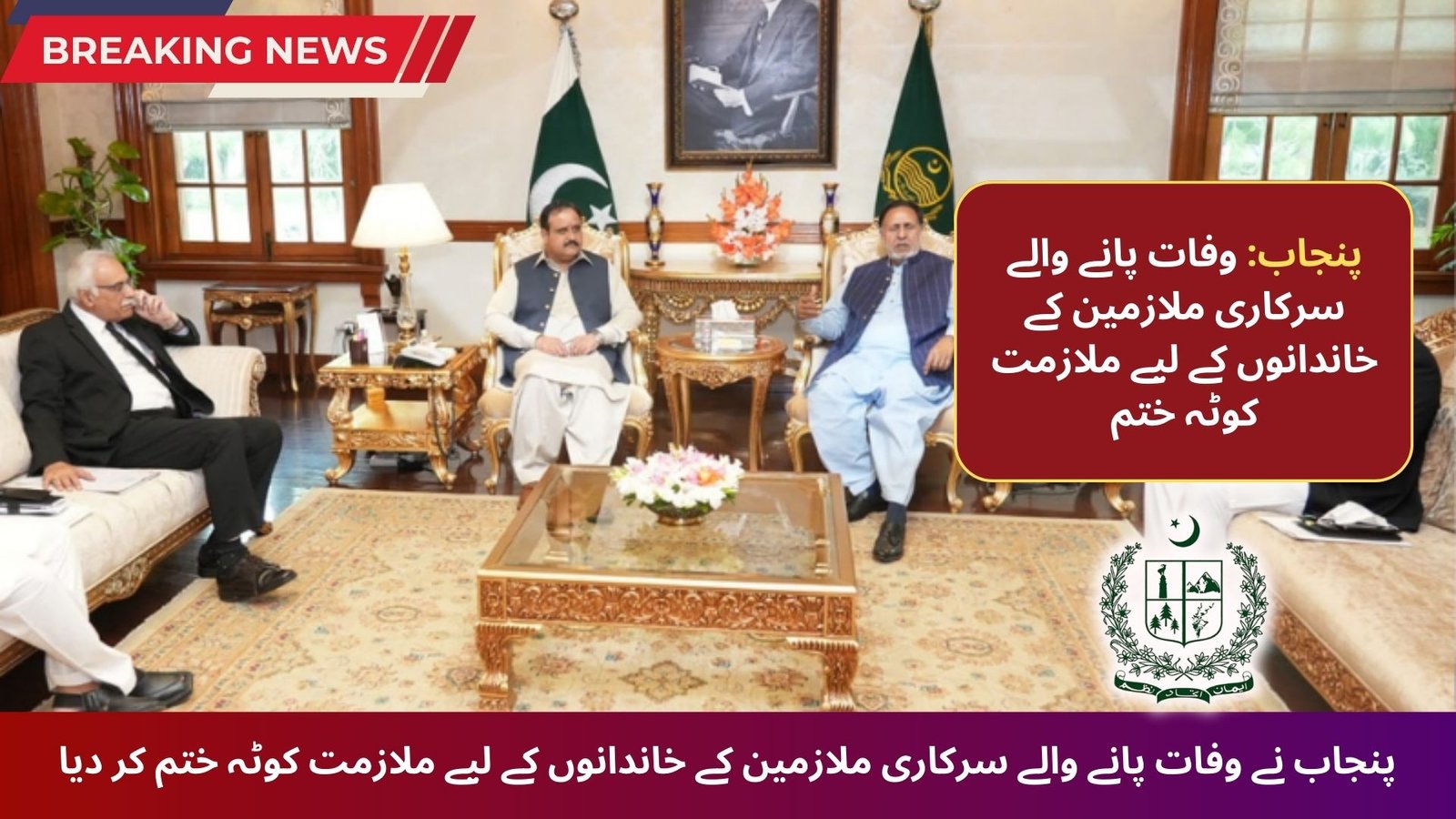
In a recent policy update, the Punjab government has decided to phase out the job quota system for the families of deceased civil servants. This change has sparked a range of reactions, with supporters and critics both weighing in on the impact of this decision.
What Was the Job Quota System?
For many years, the job quota system was a lifeline for the families of civil servants who had passed away. It provided a guaranteed pathway to government jobs, helping these families stay financially stable during challenging times. Given the limited social security options in Pakistan, this system was particularly valuable.
Why the Change?
The Punjab government has outlined several reasons for this shift:
- Promoting Meritocracy: By removing the quota, the government aims to create a more merit-based job market. The goal is to attract the most qualified candidates to enhance the province’s growth and development.
- Boosting Productivity: There’s a belief that the quota system sometimes led to the hiring of less qualified individuals, which could affect overall productivity. The new policy seeks to address this by ensuring that only the most capable candidates are chosen for government positions.
- Reducing Nepotism: The quota system was occasionally misused for nepotistic purposes. Ending it is seen as a step towards reducing corruption and favoritism in hiring practices.
How Is the Public Reacting?
Responses to the policy change have been mixed:
- Supporters: Many believe that eliminating the quota will lead to a fairer job market and a more effective government. They argue that a merit-based system will improve overall efficiency and service delivery.
- Critics: Some, especially those from families of deceased civil servants, are concerned that this change will remove crucial support during difficult times. They worry that this decision could increase financial hardships for those who relied on the quota for stability.
How Do Other Countries Handle This?
Here’s a quick look at how different countries approach job quotas and support for families of deceased civil servants:
- India: Maintains a job quota for families of deceased civil servants, providing financial stability but facing similar merit-related issues.
- Bangladesh: Does not have a specific job quota system but relies on social security measures.
- United States: No job quota, but strong social security and insurance systems offer financial support.
- United Kingdom: No job quota; relies on comprehensive social welfare systems for financial stability.
What’s Next?
The Punjab government has planned a phased approach for this policy change, which includes:
- Gradual Transition: Current beneficiaries will not be affected immediately; the quota will be phased out over time.
- Support Programs: New initiatives, such as financial assistance and skill development programs, will be introduced to help affected families adjust.
- Monitoring and Evaluation: A framework will be established to monitor the policy’s impact and make adjustments as needed.
Final Thoughts
This policy shift marks a significant change with wide-ranging effects. While aimed at fostering a more merit-based and efficient civil service, it also raises concerns about the support available to affected families. The success of this change will depend on how well the government implements the transition measures and support systems.
FAQs
Q1: Why is the Punjab government ending the job quota for families of deceased civil servants?
A1: The goal is to promote a merit-based system, improve productivity, and reduce nepotism in government hiring.
Q2: How will this change impact families of deceased civil servants?
A2: While there may be initial financial difficulties, the government plans to offer support programs to help families adapt.
Q3: How do other countries manage similar situations?
A3: Some countries, like India, have job quotas for these families, while others, such as the US and the UK, rely on strong social security and welfare systems.
Related Posts
Approval of the Apni Chhat Apna Ghar Program
The program aligns with the government’s vision of enhancing living standards across Pakistan by ensuring affordable…
A Complete Guide to the 8171 Ehsaas Program Registration
The 8171 Ehsaas Program is among Pakistan’s most extensive social welfare initiatives, designed to offer financial…
Punjab Government Relaunches Zewar-e-Taleem Program for Girls in 2024
Exciting announcement for females in Punjab! The Punjab Government has reintroduced the Zewar-e-Taleem Program, offering a…
Benazir Hari Card Initiative Introduced to Aid Farmers in Sindh
The Sindh government, led by the Pakistan People’s Party (PPP), introduced the Benazir Hari Card program…